Additional Requirements
To play, you need a phone or tablet with an internet connection and the free Biojuego Musical app installed.
You can download it by scanning the QR code included in the box or directly from here:
1. Game Content
The board game includes:
- 1 25-piece board puzzle representing the 13 categories or groups of dances that can make up a Biodanza session. The reverse side, also printed, features a second puzzle showing the image of the heron protagonist of the game. It does not intervene in the game dynamic, but you can play with it separately, assembling its illustration independently.
- 190 Music Cards from the 2009 lineup, with a QR code to play the songs on Spotify.
- 16 Playlist Cards, with their respective QR codes.
- 16 Expressive Cards: Singing/Miming
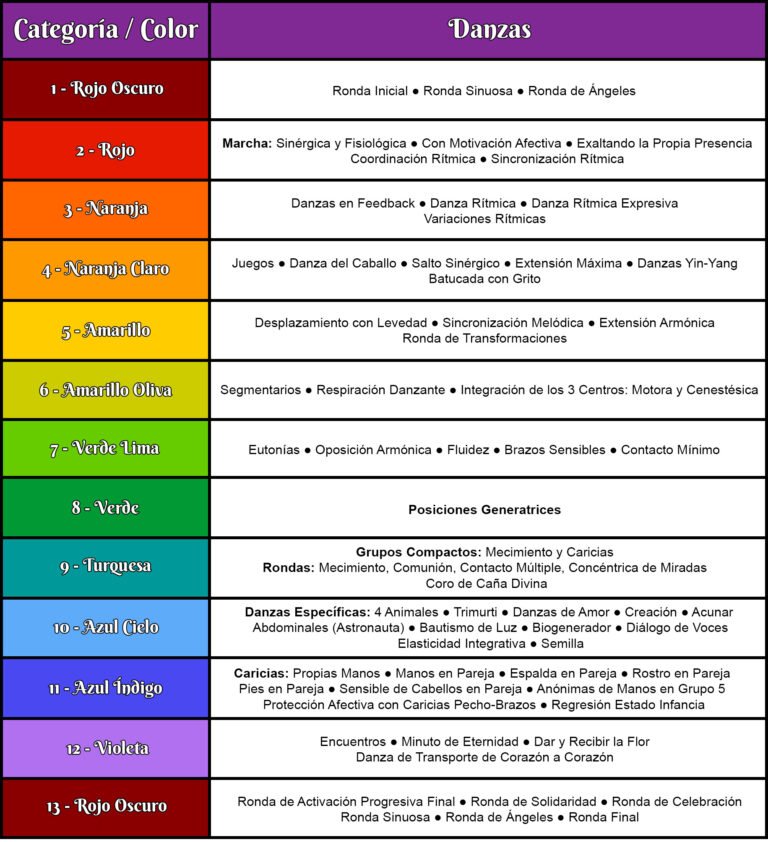
- 1 Dance-Chart representing the 13 categories of a Biodanza session with their corresponding dances.
- 4 Special colored dice, each with three faces.
- 24 Heron-Tokens
2. Preparation
- Assemble the puzzle that represents the 13 dance categories that make up the Biodanza methodological curve in the center of the table. This board will serve as a guide for each person or group to form their own session with the music cards they collect during the game, and this is where they will be placed when a person fails to guess the correct card on their turn.
- Shuffle all the Music Cards and place them in a single deck with the QR code facing up. If you are playing with more people, also add the Playlist Cards for “challenge mode” and the Expressive Cards: Singing/Miming when playing in groups so that each turn is made up of more than one person.
- Have your mobile device with the Biojuego Musical app installed. Let the vivencia begin!
3. How to Play
-
- Decide who starts and the order of turns.
- On their turn, each player rolls the die.
- Another person scans the QR code on the first card of the deck with their phone to play the music.
- 🎵 1 → The title of the music piece.
- 💃 2 → The official dance for which that music is used.
- 🎤 3 → The name of the artist, performer, or composer.
- Once the answer is given, turn the card over to check the solution.
- If the answer is correct, the player keeps the music card to create their session.
- If they also answer correctly to more than one category (title, author, and dance), they also win a Heron-Token.
- If the player guesses correctly a card whose category they already have covered in their session, they will leave it on the board over the corresponding category and can take any other missing card available there.
- If they do not need any card, they will leave the guessed card on the board and take no other.
- If they do not answer or fail, the card is placed on the board, right above the category it belongs to.
- When the music card includes several dances from different categories, the procedure is explained later in the section music cards with several dances.
- End of Game: The game ends the moment a player or group completes their session.
The music cards
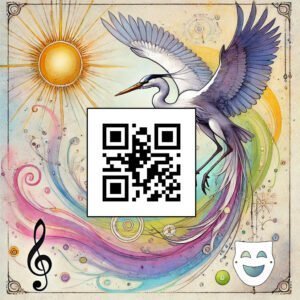
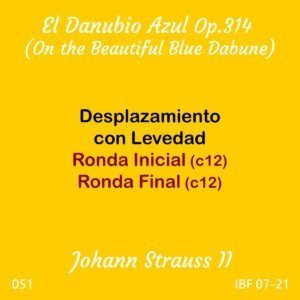
- On the front side of each music card, a QR code for scanning appears in the center.
- Of the 190 cards, 21 have a mask symbol in the lower right corner of the front side, indicating that the song corresponds to a different version and not the original one from the 2009 lineup, as it is not available on Spotify.
- Of those 21, a total of 16 are classical music versions performed by other orchestras or conductors, so faithful to the lineup version that no differences are perceived. Only 5 present slight variations, although they remain totally recognizable.
- On the back side is the answer. From top to bottom appear: the title of the work, the dance or dances for which that music is used, and the author and/or performer.
In the lower part, two numerical codes are shown:- On the left, an internal three-digit numerical ordering code that is not necessary for the development of the game.
- On the right, the official numbering of that music in the IBF 2009 Lineup.
- Many music cards also include the dances in which the CIMEB 2012 lineup proposes to use them, indicated as follows: (c12)
- Each music card has a background color that corresponds to the dance category it belongs to, and matches the color of the 13 categories on the board.
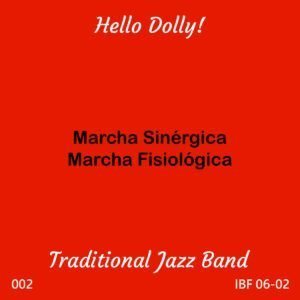
- Some songs correspond only to one category.
Example: “Hello Dolly!” by Traditional Jazz Band, which is used only in category 2: “Walks, Rhythmic Coordinations, and Rhythmic Synchronization”.
The card has the color red, the same as the central Dance-Card that defines category 2.
- Other songs may cover several categories.
Example: “Be Here Now” by George Harrison
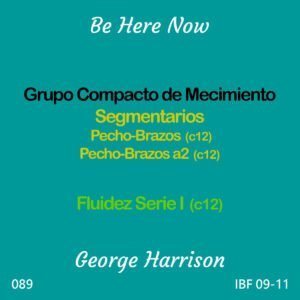
- Its main category is 9 (Other Groups and Rounds), whose color is turquoise, the same as the card.
However, this song can also be used in other official dances:- “Segmentals” (category 6, text in olive yellow color).
- “Flow Series I” (category 7, text in lime green color).
Therefore, if this card is obtained upon being guessed correctly, it is valid for any of the categories it includes (5, 7, or 9). Whether obtained by the player on their turn to create their session, or placed in the center of the table, it must be strategically left on the Dance-Card of one of those categories.
Special Cards:
1. Playlist Card
- When a Playlist Card appears, a person from the opposing group scans the QR code, just like with the music cards.
- That person chooses one of the five songs from the Spotify list and plays it to test the player who is on turn.
- On their turn, the player now rolls the die and must guess the information corresponding to the number obtained.
- If they answer correctly, they get a Heron-Token.
- The songs included in that playlist are also shown on the back of the card.
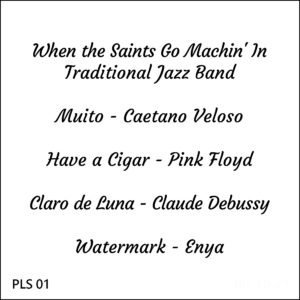
2. Expressive Cards: Singing/Miming
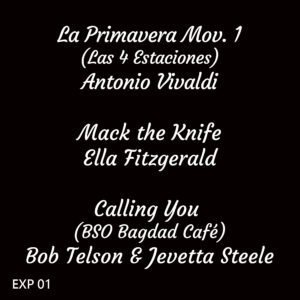
- These cards are only used if participants form groups to play in turns.
- A person in the group on their turn, by **humming** (without singing the lyrics) and/or **miming**, expresses the title of one of the three songs they choose from the ones on the card to their teammates.
- If the answer is correct, the group gets a Heron-Token.
3. The Heron-Tokens
Heron-Tokens function as wildcards. They are obtained by guessing correctly:
- More than one category of the music card (title, authorship, and the dance for which it is used).
- The song playing on the Playlist.
- The song expressed through singing / miming.
On their turn, the player can choose to play or use that turn to exchange Heron-Tokens for a music card from the center of the table that they need for their session.
Difficulty Levels
Before starting the game, players can agree on the difficulty level, which is linked to the Heron-Tokens: how they are obtained and how they are exchanged.- How many of the three categories of a music card (song, artist, or dance) must be guessed correctly to obtain a Heron-Token.
- How many Heron-Tokens are necessary to exchange them for a music card from the center of the table.
4. Game Modes
– Individual Mode:
It is a fun and entertaining form of playful study, ideal for learning, reviewing, and remembering the songs, artists, and dances.
In this mode:
- You can only play with a premium account.
- Only music cards are used, removing the Playlist and Expressive Cards: Singing/Miming from the deck.
Description:
The dynamic is identical to the other game modes, with the difference that a single player participates in a challenge against the system, which acts as the opponent.
- The player rolls the die and scans music cards.
- Each correctly guessed music card is kept by the player to form their session.
- The incorrectly guessed cards are placed in the center on the corresponding Dance-Card.
- Heron-Tokens can also be obtained by the player.
- The game concludes when one of the two (player or system) completes the session.
– Collaborative Mode:
More is learned when done in company. A way to share knowledge and mutually enrich oneself.
- From two players onwards, with no limit on participants.
- All players play with the objective of creating a joint Biodanza session.
- All cards are included. For the Playlist and Expressive Cards: Singing/Miming, one person will choose which song the rest of the participants will have to guess.
- If you do not have a Spotify Premium account, a person who acts as the musician (DJ) will also be necessary, as the songs, once scanned, will not be able to be hidden and will remain visible on the phone screen.
– Challenge Mode:
- From one to four players. If more than four people want to play, groups of participants can be established.
- Each player or each group will create their own session.
- The game ends when one player manages to complete their session. From here, the game can continue so that the person or group that has finished can help the others complete the remaining cards.
- Expressive Cards: Singing/Miming are only used if participants form groups to play in turns.
5. Important Notes on Spotify

With our free app you can scan the QR code printed on the music cards. When you do so, Spotify will automatically open on your mobile device and the song you have to recognize will start playing.
You do not need a Spotify platform account, although the game experience varies:
- With a Spotify Premium account
- Once the QR code is scanned and the song starts playing, the data (artist name, music piece title, and album cover) remain hidden, and there is a button that allows you to show the result at any time.
- Playback starts from the beginning or from the point where the official version used in Biodanza officially starts, and you can listen to the full song if you wish.
- Without an account or with a Spotify Free account
Due to Spotify limitations, when playing without a Premium account, the following conditions must be taken into account:
- Spotify does not allow songs to be hidden as in Premium mode. When scanning the QR codes, the data (artist name, music piece title, and album cover) are shown on the device screen next to the playback button. Therefore:
- Individual Mode: It will not be possible to play.
- Collaborative Mode: A person acting as the musician (DJ) will be necessary, as the songs, once scanned, will not be able to be hidden and will remain visible on the phone.
- Challenge Mode: You can play perfectly if another person scans the code and has access to the result.
- Each song plays for 20 to 30 seconds, in a random fragment of the song between the middle and the end of it.
- Spotify does not allow songs to be hidden as in Premium mode. When scanning the QR codes, the data (artist name, music piece title, and album cover) are shown on the device screen next to the playback button. Therefore:
For this reason, there are three music cards that are unrecognizable as they do not start playing from the beginning. These cards must be removed from the deck or ignored if they appear in the game, and are marked on the back with a “prohibited” symbol in the upper left corner:
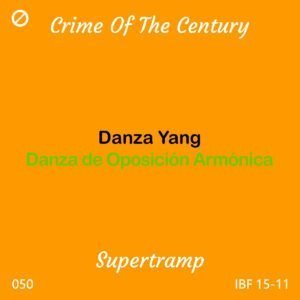
- Card number 50: “Crime of the Century” by Supertramp.
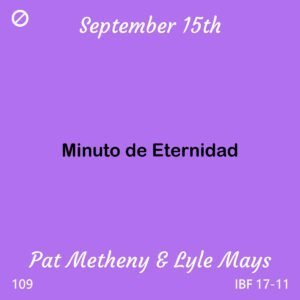
- Card number 109: “September 15th” by Pat Metheny & Lyle Mays.
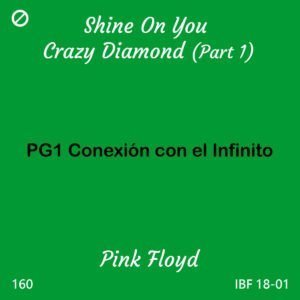
- Card number 160: “Shine On You Crazy Diamond” by Pink Floyd.